
Pompeii
Ruins in Italy – History, Facts & Best Tours
The ancient city of Pompeii is one of the most important archaeological sites in the world. Located in southern Italy near Naples, Pompeii was buried by the eruption of Mount Vesuvius in 79 AD.
The Eruption of Mount Vesuvius
79 AD: The Day That Changed
History
On August 24, 79 AD, Mount Vesuvius erupted with catastrophic force, burying Pompeii under 4-6 meters of volcanic ash and pumice.
The Eruption Timeline
1:00 PM – Initial Blast.
Massive explosion sends ash column 33 km into the sky.
Evening – Pumice Fall
Volcanic pumice rains down on Pompeii, collapsing roofs.
Midnight – Pyroclastic Surges
Deadly gas clouds race down the mountain at 100 km/h.
Next Day – Total Burial
City completely buried under volcanic material, frozen in time.
Preservation & Discovery
Perfect Preservation
Volcanic ash created airtight seal, preserving buildings, objects, and bodies.
1748 Rediscovery
Spanish engineer Rocque Joaquin de Alcubierre begins systematic excavations.
Plaster Casts
Giuseppe Fiorelli’s technique captures final moments of victims in haunting detail.
Ongoing Excavation
Only 2/3 of Pompeii has been excavated; new discoveries continue today.
Plan Your Visit to Pompeii
Planning your visit to Pompeii? Here’s everything you need to know about Pompeii tickets, opening hours, and guided tours to make the most of your experience.
Opening Hours & Best Times
-
Daily: 9:00 AM - 7:00 PM (Apr-Oct)
Last entry 90 minutes before closing
-
Best Time: Early Morning (9:00-11:00 AM)
Cooler temperatures and fewer crowds
Opening Hours & Best Times
-
Daily: 9:00 AM - 7:00 PM (Apr-Oct)
Last entry 90 minutes before closing
-
Best Time: Early Morning (9:00-11:00 AM)
Cooler temperatures and fewer crowds
Opening Hours & Best Times
-
Daily: 9:00 AM - 7:00 PM (Apr-Oct)
Last entry 90 minutes before closing
-
Best Time: Early Morning (9:00-11:00 AM)
Cooler temperatures and fewer crowds
Opening Hours & Best Times
-
Daily: 9:00 AM - 7:00 PM (Apr-Oct)
Last entry 90 minutes before closing
-
Best Time: Early Morning (9:00-11:00 AM)
Cooler temperatures and fewer crowds
Opening Hours & Best Times
-
Daily: 9:00 AM - 7:00 PM (Apr-Oct)
Last entry 90 minutes before closing
-
Best Time: Early Morning (9:00-11:00 AM)
Cooler temperatures and fewer crowds
Opening Hours & Best Times
-
Daily: 9:00 AM - 7:00 PM (Apr-Oct)
Last entry 90 minutes before closing
-
Best Time: Early Morning (9:00-11:00 AM)
Cooler temperatures and fewer crowds
Opening Hours & Best Times
-
Daily: 9:00 AM - 7:00 PM (Apr-Oct)
Last entry 90 minutes before closing
-
Best Time: Early Morning (9:00-11:00 AM)
Cooler temperatures and fewer crowds
Opening Hours & Best Times
-
Daily: 9:00 AM - 7:00 PM (Apr-Oct)
Last entry 90 minutes before closing
-
Best Time: Early Morning (9:00-11:00 AM)
Cooler temperatures and fewer crowds
Pompeii Popular Tours
No tours found.
No tours found.
No tours found.
No tours found.
Pompeii Preservation Challenges
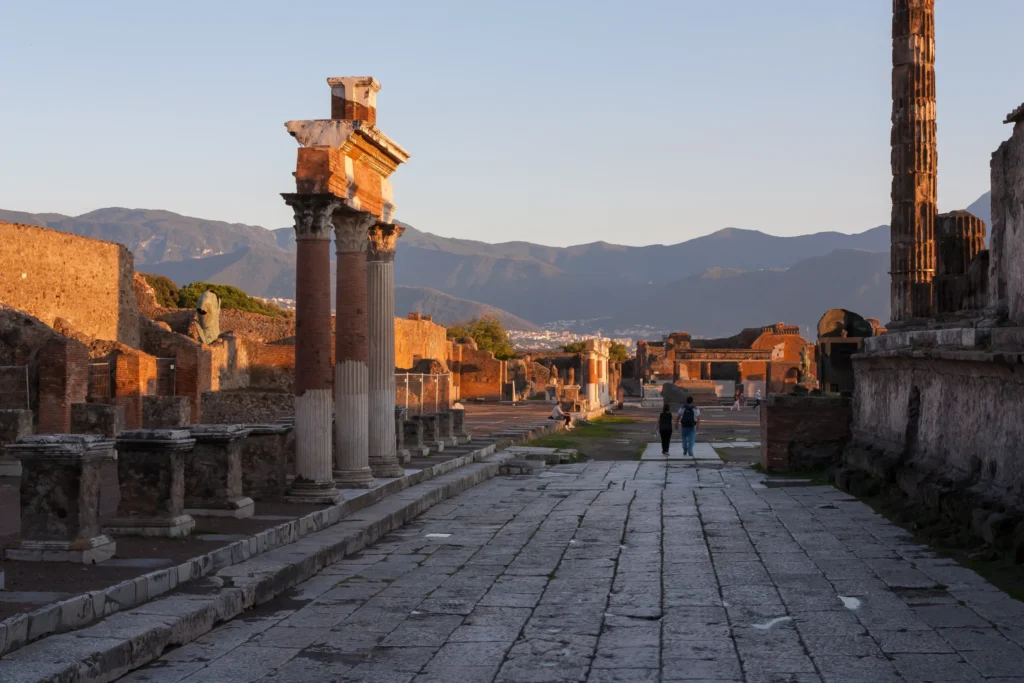
Conservation Efforts
Weather Damage
Rain, wind, and temperature changes gradually damage ancient walls, frescoes, and structures.
Tourism Impact
Over 3 million visitors each year cause wear on pathways and fragile surfaces.
Digital Preservation
3D scanning and photogrammetry create permanent digital records of the site.
Restoration Projects
The €105 million Great Pompeii Project supports structural repairs and drainage improvements.

€105 Million Project
Great Pompeii Project funded by EU and Italian government for urgent conservation work.

UNESCO Protection
Pompeii has been a UNESCO World Heritage Site since 1997, ensuring global preservation support.

Visitor Management
Controlled access and guided tours help balance tourism with conservation.
Daily Life in Ancient Pompeii
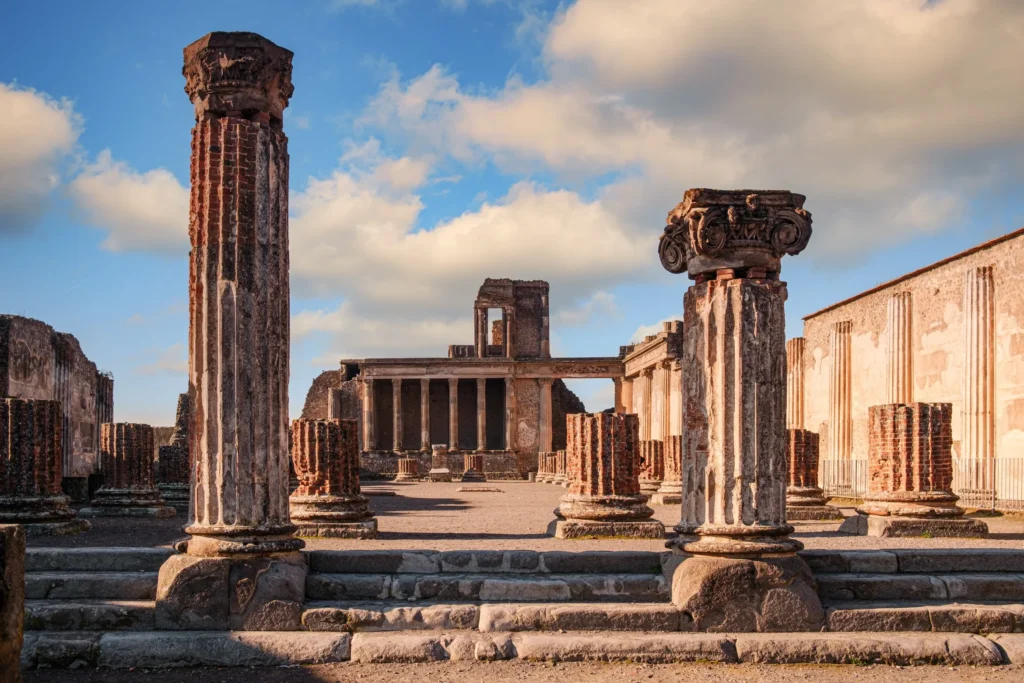
Roman Houses and Daily Living
Atrium Design
Homes centered around an atrium that collected rainwater and served as the heart of daily life.
Frescoes & Mosaics
Walls and floors featured detailed art, showcasing wealth and Roman lifestyle.
Social Spaces
Dining rooms (triclinia) were used for gatherings, meals, and social status.
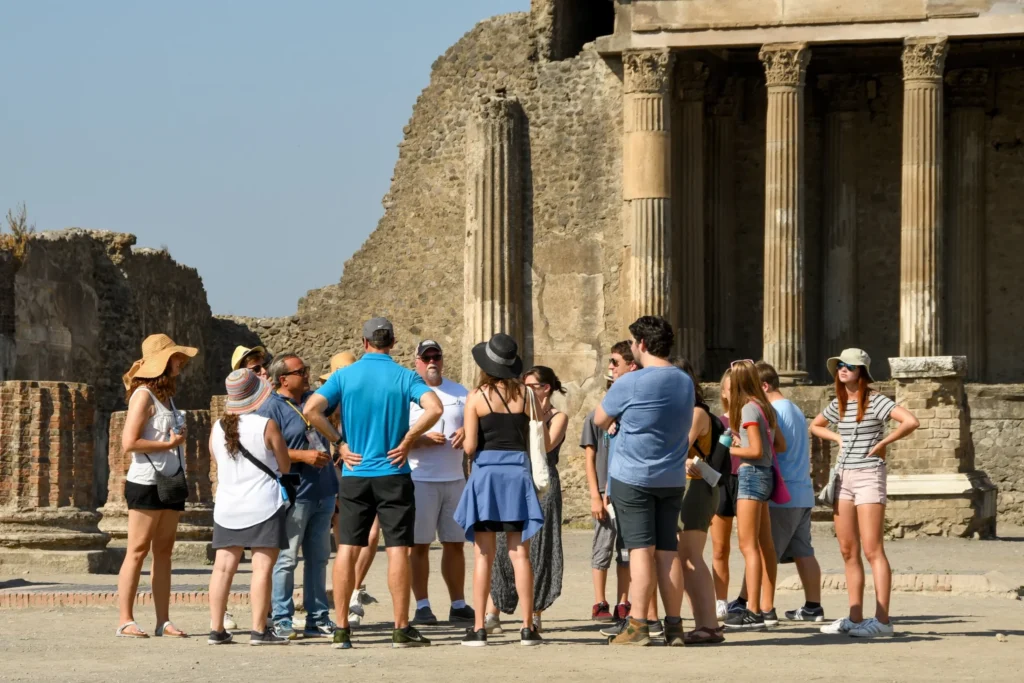
Commerce & Trade
Thermopolia
Ancient street food counters serving hot meals to locals.
Bakeries
Over 30 bakeries produced bread using millstones and wood-fired ovens.
Markets
The Macellum was the main market for food and daily trade.
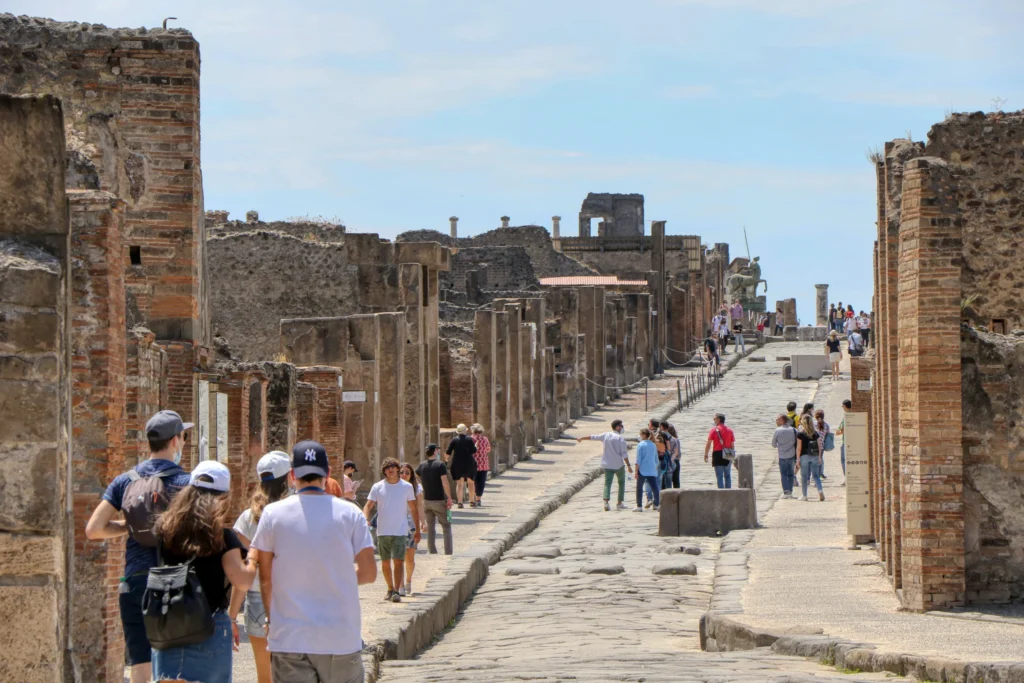
Entertainment and Public Life
Amphitheatre
A 20,000-seat arena for games and public events.
Theatres
Venues for Greek and Roman plays and performances.
Public Baths
Social hubs with hot, warm, and cold bathing areas.
Social Structure in Ancient Pompeii
Wealthy Elite in Pompeii
Elite Roman families lived in luxurious villas with private baths, gardens, and elaborate interiors.
Merchants & Artisans
Pompeii’s middle class operated shops, workshops, and local businesses, driving trade and the city’s economy.
Slaves & Freedmen
Enslaved people supported daily life and households, while freedmen could own property, run businesses, and gain social mobility.
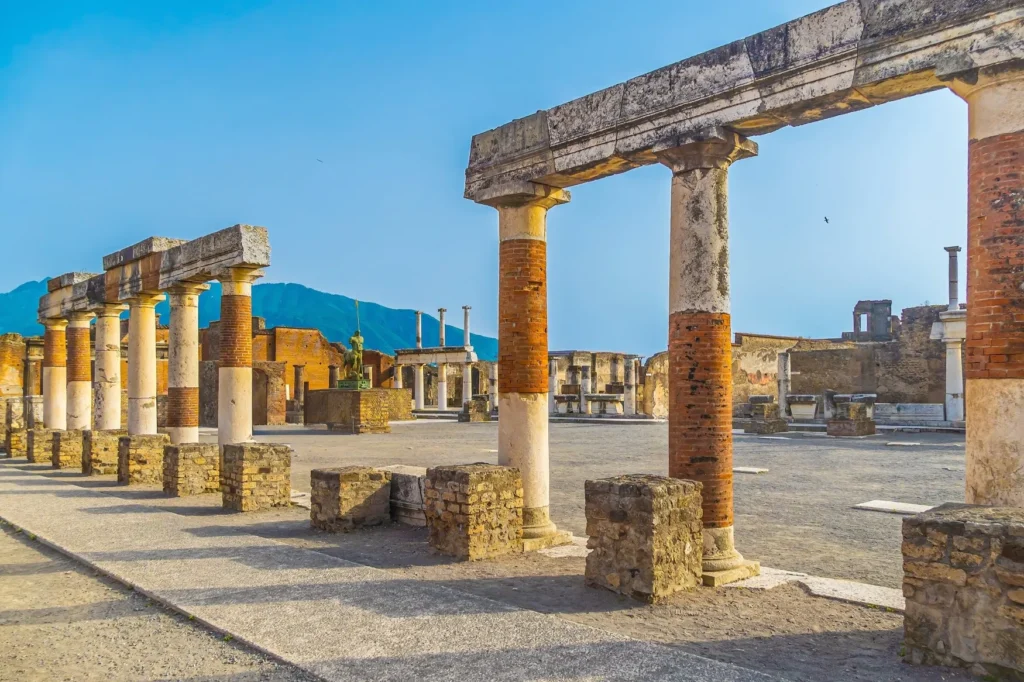
Book Your Pompeii Experience
Explore the ancient city with expert archaeologist guides. Limited availability!
Pompeii Map Before the Eruption
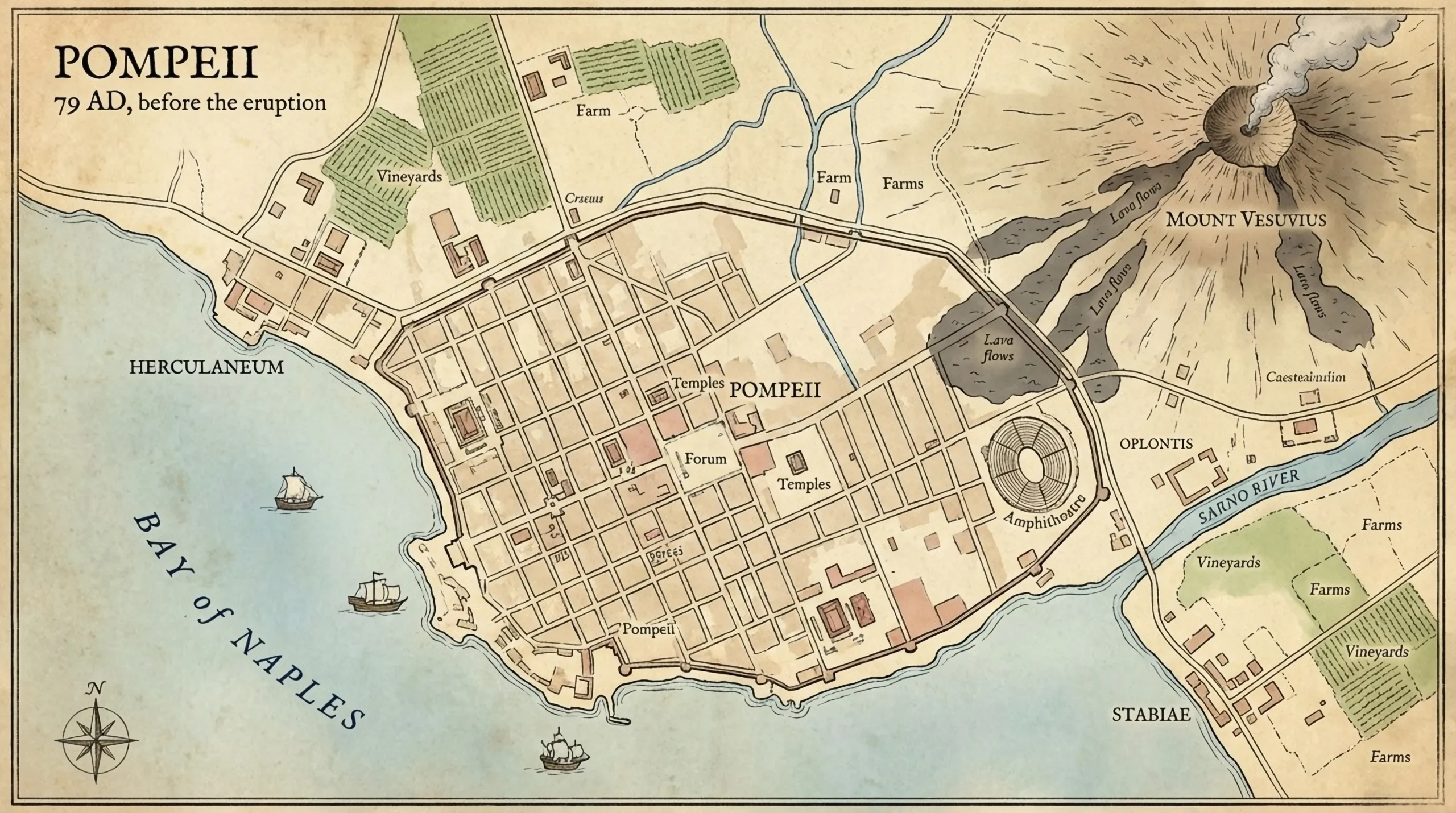
- City of Pompeii
- Mount Vesuvius
- Bay of Naples
- The Forum
Frequently asked questions for Pompeii Tours
How do I book Pompeii tours online?
You can book Pompeii tours online through official providers or trusted platforms. It’s best to reserve your Pompeii tickets in advance, especially during peak season, to secure your preferred time slot.
Do I need to book Pompeii tickets in advance?
Do you need to book Pompeii tickets in advance?
Where is Pompeii located?
Pompeii is located near Naples in southern Italy, easily accessible by train or car.
What are the opening hours of Pompeii?
Pompeii is typically open from 9:00 AM to 7:00 PM, with seasonal variations
How long does a Pompeii tour take?
A standard Pompeii guided tour lasts 2–3 hours, while full-day tours can take up to 6–8 hours.
What should I wear when visiting Pompeii?
Wear comfortable walking shoes, as the terrain is uneven. Bring sunscreen, a hat, and water during summer.
Can I take photos in Pompeii?
Yes, photography is allowed for personal use throughout the archaeological site.
Is Pompeii wheelchair accessible?
Partially. Some areas are accessible, but much of the site has uneven terrain.
Are the paths difficult to walk?
Yes, Pompeii has cobblestones and uneven surfaces, requiring comfortable footwear.
Can you visit Pompeii and Mount Vesuvius in one day?
Yes. Many tours combine both sites.
When was Pompeii discovered?
Pompeii was rediscovered in the 18th century. Excavations began in 1748, revealing the ancient city that had been buried for centuries.
Can I cancel or modify my booking?
Lorem ipsum dolor sit amet, consectetur adipiscing elit. Ut elit tellus, luctus nec ullamcorper mattis, pulvinar dapibus leo.
Latest Articles
Stay updated with our newest content
Introduction Nobody tells you that choosing the right tour format is one of the most consequential decisions you’ll make for

Introduction Nobody expects to be turned away at the gate of one of the ancient world’s greatest sites because of
Introduction Most “best time to visit” travel guides will tell you April or May and leave it at that. And
Introduction Three of the ancient world’s most extraordinary sites sit within a 30-kilometre radius of Naples. Most visitors spread them
Introduction I’ve watched it happen more times than I can count. A family arrives at the Porta Marina entrance at
Introduction Here’s something most Pompeii visitors never think to ask before booking: am I actually buying the right ticket? You