

Introduction
Most “best time to visit” travel guides will tell you April or May and leave it at that. And they’re not wrong — but they’re not telling you the whole story either.
The truth is, every month at the Pompeii Archaeological Park involves a trade-off. April brings ideal weather and enormous crowds. August is brutal heat, but peak atmosphere. December is quiet and cold, but genuinely magical in its emptiness. And the shoulder months — October, November, early March — offer something rare in one of Italy’s most visited sites: space to actually think.
After watching thousands of visitors move through this site across every season, I can tell you exactly what you’re signing up for — month by month, honest and unfiltered. Here’s what nobody else will say outright.
Why the Month You Visit Matters More at Pompeii Than Almost Anywhere Else
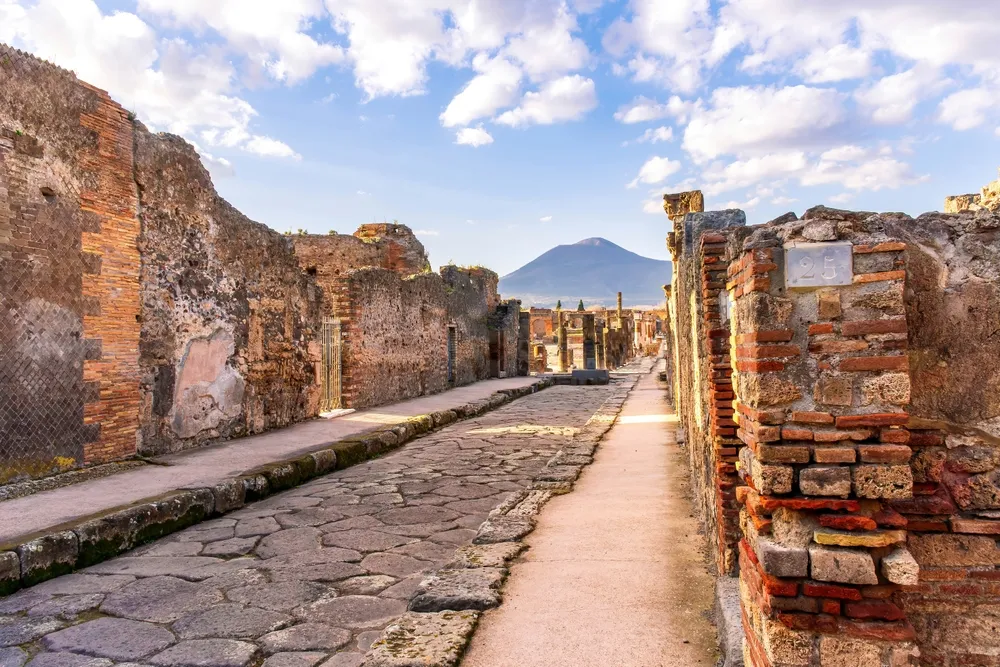
Pompeii is a 44-hectare open-air archaeological site with almost no indoor spaces, minimal shade, and a daily visitor cap of 20,000 people. That combination makes it unusually sensitive to season in a way that, say, a museum visit simply isn’t.
In peak summer, the temperature on the ancient basalt streets can exceed 40°C — and unlike a modern city, there is no air conditioning to duck into. The ruins absorb and radiate heat, and the crowds compress into the same shaded areas around the Forum and the baths.
In winter, the site is almost eerily empty — but some of the outlying houses and excavation areas close on a rotating basis, and the grey southern Italian light can flatten the visual drama that golden-hour spring visits deliver.
The right month changes what you see, how you feel, and how much you spend. It also determines whether you need to book your Pompeii tickets weeks ahead or can be more flexible. All of that deserves a proper answer.
Season by Season — The Honest Breakdown
Spring (March, April, May) — The Sweet Spot With a Catch
Spring is genuinely the best season to visit Pompeii for most people — but the word is out, and the crowds reflect it.
March is the underrated gem of the calendar. Early March still carries some winter quiet: visitor numbers are lower, temperatures sit comfortably between 12°C and 17°C, and the site’s wildflowers — which push up through the ancient streets and courtyards — are at their most vivid. From mid-March onward, school groups begin arriving in force, particularly Italian domestic visitors. Still, an early morning visit in the first two weeks of March delivers a version of Pompeii that feels almost private.
April is peak season in everything but name. Easter week in particular rivals August for visitor density — Pompeii tickets sell out days in advance, and the daily 20,000-visitor cap is regularly hit before noon. Book your timed entry slot at least a week ahead during April, and consider a skip-the-line guided tour to move efficiently through the site without joining the bottleneck at the main entrance gate.
May is arguably the single best month for a first visit. Temperatures are warm but not yet punishing (typically 18°C–24°C), the light is long and golden in the late afternoon, and the site is busy but not overwhelmed in the way April school holiday weeks can be. A small-group guided tour in May, arriving for the first entry slot of the morning, is the gold standard Pompeii experience.
Best for: First-time visitors, families, photography, those combining Pompeii with a broader Italy trip.
Summer (June, July, August) — Spectacular and Demanding
Summer at Pompeii is not for the faint-hearted — and it is also, paradoxically, when the site hums with the most energy.
June still carries the best of spring’s conditions into the first two weeks before the full summer surge arrives. Late June begins to feel like a different season: visitor numbers climb sharply, and temperatures push past 28°C consistently.
July and August are the months most international tourists choose, because they align with school holidays and peak travel season. The reality on the ground: by 10:00 AM in August, the Forum is genuinely crowded, the heat radiating off the ancient stone is intense, and the queues at the ticket booths — for visitors who haven’t pre-booked — can run to 45 minutes or more.
None of that means you should avoid it. A dawn entry at 9:00 AM with pre-booked Pompeii tickets and an archaeologist-led guided tour, finishing by 1:00 PM before the full midday heat sets in, is an entirely manageable and memorable experience. It simply requires discipline, sun protection, at least two litres of water, and the self-restraint to leave before the afternoon. Pairing a morning at Pompeii with an afternoon day trip from Sorrento or a boat trip on the Bay of Naples makes a perfect summer day.
Best for: Visitors with no other available window, those combining Pompeii with Amalfi Coast or Sorrento, early risers.
Autumn (September, October, November) — The Insider’s Season
If spring is the crowd’s favourite, autumn is the connoisseur’s choice.
September is arguably the most complete month in the Pompeii calendar. Summer crowds begin to thin from the second week onward, temperatures drop to a very comfortable 22°C–26°C, and the light takes on the warm amber quality that makes the ochre walls and ancient frescoes look their absolute best. The site is still fully operational — all excavation areas and key houses are open — and the tourist infrastructure (guides, tours, transport) is running at full capacity.
October deepens that feeling. Visitor numbers fall significantly, accommodation prices across Sorrento, Naples, and the wider Campania region drop, and the Pompeii Archaeological Park becomes genuinely navigable without a tight itinerary. A self-guided visit in October, paired with a licensed guide for the key houses, allows the kind of slow, contemplative exploration that summer simply doesn’t permit.
November is the month most guides won’t recommend — and the month I’d quietly suggest for the right kind of traveller. Rain is more likely, the days are shorter, and some peripheral areas of the site operate on reduced schedules. But Pompeii in November has an atmosphere that no other month matches: mist sometimes sits low over the ruins in the early morning, the visitor numbers are a fraction of peak season, and the silence in the residential streets away from the Forum feels genuinely ancient. It’s also when timed entry Pompeii tickets are easiest to obtain, often available the same day.
Best for: Repeat visitors, archaeology enthusiasts, solo travellers, couples, photographers, those on a flexible budget.
Winter (December, January, February) — For the Seriously Curious
Winter at Pompeii is a niche experience — and an honest one to describe.
December through February brings Pompeii’s lowest visitor numbers of the year. Outside of the Christmas holiday period (roughly 23 December to 6 January), the site can feel close to deserted. That emptiness is both its greatest asset and its clearest limitation.
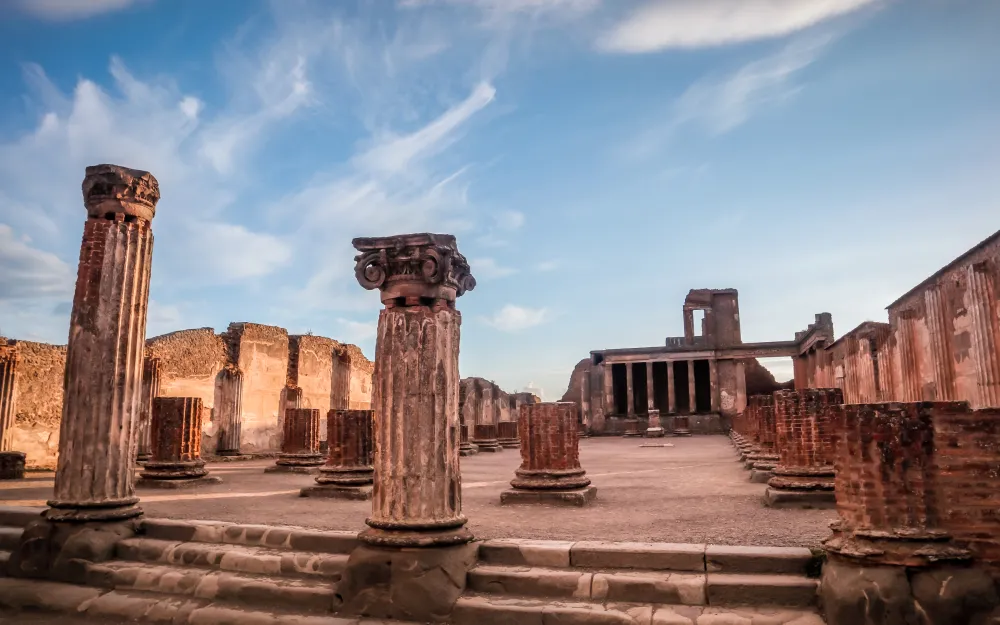
On the asset side: you will walk through the ancient city with space to stop, stare, and genuinely absorb it. The plaster casts, the preserved mosaics, the Forum with Vesuvius looming behind it in winter clarity — all of it hits differently when you’re not surrounded by five hundred other visitors.
On the limitation side: temperatures in January sit around 8°C–12°C and the wind across the open site is sharp. A rotating closure system means some of the smaller houses and outlying excavation areas are shut on any given day. And the famous first Sunday of the month free entry — which applies year-round — draws larger crowds even in winter, so it’s worth avoiding if solitude is your goal.
The Herculaneum Archaeological Park, Pompeii’s smaller and even quieter neighbour, is particularly rewarding in winter: its compact covered streets retain some warmth, and the reduced footfall makes the experience feel almost private.
Best for: Budget travellers, those who’ve visited before, history specialists, visitors combining Pompeii with a quiet Naples winter break.
Practical Tips That Apply Year-Round
Whatever month you choose, a handful of constants apply — and ignoring them is where most visits go sideways.
Book Your Pompeii Tickets Online, Always
Pompeii operates a strict timed entry system. The daily cap of 20,000 visitors is real, and in any month from April through October, that limit can be reached earlier than most people expect. Booking your Pompeii tickets online — at the official Pompeii Tickets portal — guarantees your entry slot and takes the single biggest variable out of the day. Turning up without a booking in high season is genuinely risky.
Take a Guided Tour — It Changes Everything
Pompeii’s on-site signage is sparse to the point of being unhelpful. Without a guide, vast sections of the site — the suburban villas, the residential neighbourhoods, the workshop districts — go completely unread. An archaeologist-led guided tour, whether a small-group guided tour or a private experience, transforms what you see from impressive ruins into a comprehensible, living city. This is true in every season, but especially in summer when crowd management and directional flow become an added variable.
Arrive at Opening Time
The single most reliable piece of advice for any month, any season: be at the gate when the site opens at 9:00 AM. The difference between a 9:00 AM arrival and a 10:30 AM arrival — in terms of crowd density, heat, and the availability of the site’s most popular areas — is substantial.
Factor in the Free Sunday
On the first Sunday of every month, entry to the Pompeii Archaeological Park is free for all visitors. This is well-known, and the site is correspondingly busier than a typical Sunday. If your visit happens to fall on a free Sunday and budget isn’t a concern, consider visiting on the Saturday instead for a more comfortable experience.
How the Month Affects Your Wider Campania Plans
Your Pompeii visit rarely exists in isolation. For most travellers, it sits within a broader southern Italy itinerary — a day trip from Rome, a few days in Sorrento, or a Naples-based base exploring the entire region.
The month shapes that wider picture significantly. A May or October visit gives you ideal conditions not just for Pompeii but for the Amalfi Coast, Capri, and the wider Bay of Naples — all of which are either too crowded (July–August) or too quiet (January–February) to experience at their best.
If you’re combining Pompeii with Mount Vesuvius — whose summit path is exposed and sometimes closed in severe winter weather — September and October offer the best conditions: clear visibility from the crater rim, comfortable temperatures for the ascent, and Pompeii visits that don’t require 5:00 AM alarm calls to beat the heat.
Conclusion
There is no single best month to visit Pompeii — there’s only the best month for the kind of visitor you are.
If you want ideal weather and don’t mind company, May is your answer. If you want the site almost to yourself and don’t mind a coat, February or November will give you something most tourists never experience. If July is the only month that works for your schedule, an early-morning timed entry slot with a skip-the-line guided tour and a pre-booked Pompeii ticket will still deliver one of the most powerful experiences in the ancient world.
What matters more than the month is the approach: book ahead, arrive early, take a guide, and give yourself permission to linger. Pompeii has been waiting almost two thousand years. It can accommodate you in any season.